How to reduce food waste at home: 12 habits that actually stick
By Grozaak · Published on · 7 min read
The short answer
Most food thrown away at home is food someone meant to eat but didn't get to in time. The habits that cut it are unglamorous: look at what you have before you shop, buy only what you'll cook, store it so it lasts, and use up what's open before you open something new.
Don't start all twelve at once. Start by counting what you throw away for one week. It tells you which of the other eleven you actually need.
WHY IT'S WORTH THE EFFORT
Households are where most food waste happens. The UN Environment Programme's Food Waste Index found that 1.05 billion tonnes of food were wasted worldwide in 2022, and 60 per cent of it was wasted at home, more than restaurants and shops combined. Households wasted over a billion meals a day.
It isn't only a rich-country problem. UNEP found that average household waste differs by just 7 kg per person between high-income, upper-middle-income and lower-middle-income countries.
It costs real money too:
- United States: the average family of four loses about $1,500 a year to uneaten food, according to the USDA.
- United Kingdom: a household of four wastes about £1,000 of food a year, according to WRAP.
WRAP's research has one more number worth remembering: nearly 40 per cent of household food waste happens because food wasn't used in time. The problem usually isn't cooking skill or a lack of recipes. It's food that sat in the fridge until it was too late.
WHY FOOD WASTE TIPS DON'T STICK
Most advice is a list of thirty tips, and most people try five, keep none and feel guilty. Habits that last have three things in common. They're small. They hang on something you already do, like writing a shopping list or unpacking the bags. And they show you a result.
So for each habit below there's what to do, the reason people usually give it up, and how to stop that happening.
BEFORE YOU SHOP
1. Count what you throw away for one week
Do this: every time something goes in the bin, note what it was and why. Did you forget it, buy too much, cook too much, or did it go off sooner than expected? One week is enough.
Why people quit: it feels like homework, and the list is uncomfortable to look at.
Make it stick: one week only, a note on your phone, just the item and the reason. You're looking for the pattern, not the total. If it's always bread, go to habit 9. If it's always salad, habit 4. If it's leftovers, habit 11.
2. Look in the fridge before you write the list
Do this: check the fridge, freezer and cupboards before you shop, and write down what needs using up. The US Environmental Protection Agency (EPA) suggests planning the coming week's meals around that list.
Why people quit: shopping from memory is quicker, and the fridge is at home while you're in the shop.
Make it stick: take a photo of the fridge as you leave. Better, keep the shopping list somewhere everyone in the house can see and add to, so it's up to date before anyone sets off.
3. Plan fewer meals than you think you need
Do this: count the dinners you'll actually cook at home this week, after nights out, takeaways and leftovers, and plan only those. The EPA's advice is the same: base the list on how many meals you'll eat at home.
Why people quit: a seven-day meal plan falls apart by Wednesday, and then planning feels pointless.
Make it stick: plan four dinners, not seven. Leave the other nights for leftovers, the use-it-up meal (habit 12), or whatever happens.
4. Write amounts on the list, not just items
Do this: write how much and what it's for. The EPA's example is "salad greens: enough for two lunches". Where you can, buy loose fruit and vegetables so you can take exactly that.
Why people quit: most produce comes in fixed packs, so "two carrots" becomes a 1 kg bag.
Make it stick: buy loose whenever there's a choice. WRAP found that only 19 per cent of fresh produce is sold loose by large UK retailers, and estimates that selling apples, potatoes and bananas loose would prevent 60,000 tonnes of waste a year. When you have to buy the big bag, decide in the shop what the rest is for.
5. Treat a multi-buy as a cost, not a saving
Do this: before you take the "3 for 2", name the meal each one is for.
Why people quit: deals feel like good shopping, and saying no feels like losing money.
Make it stick: if you can't name the meal, the deal costs you money. If you take it anyway, freeze the extras the day you get home (habit 9).
WHEN YOU GET HOME
6. Put new food behind old food
Do this: when you unpack, move what's already in the fridge to the front and put the new shopping behind it. Shops call it first in, first out.
Why people quit: it makes unpacking slower.
Make it stick: only do it for the things you often have two of: milk, yoghurt, cheese, opened jars.
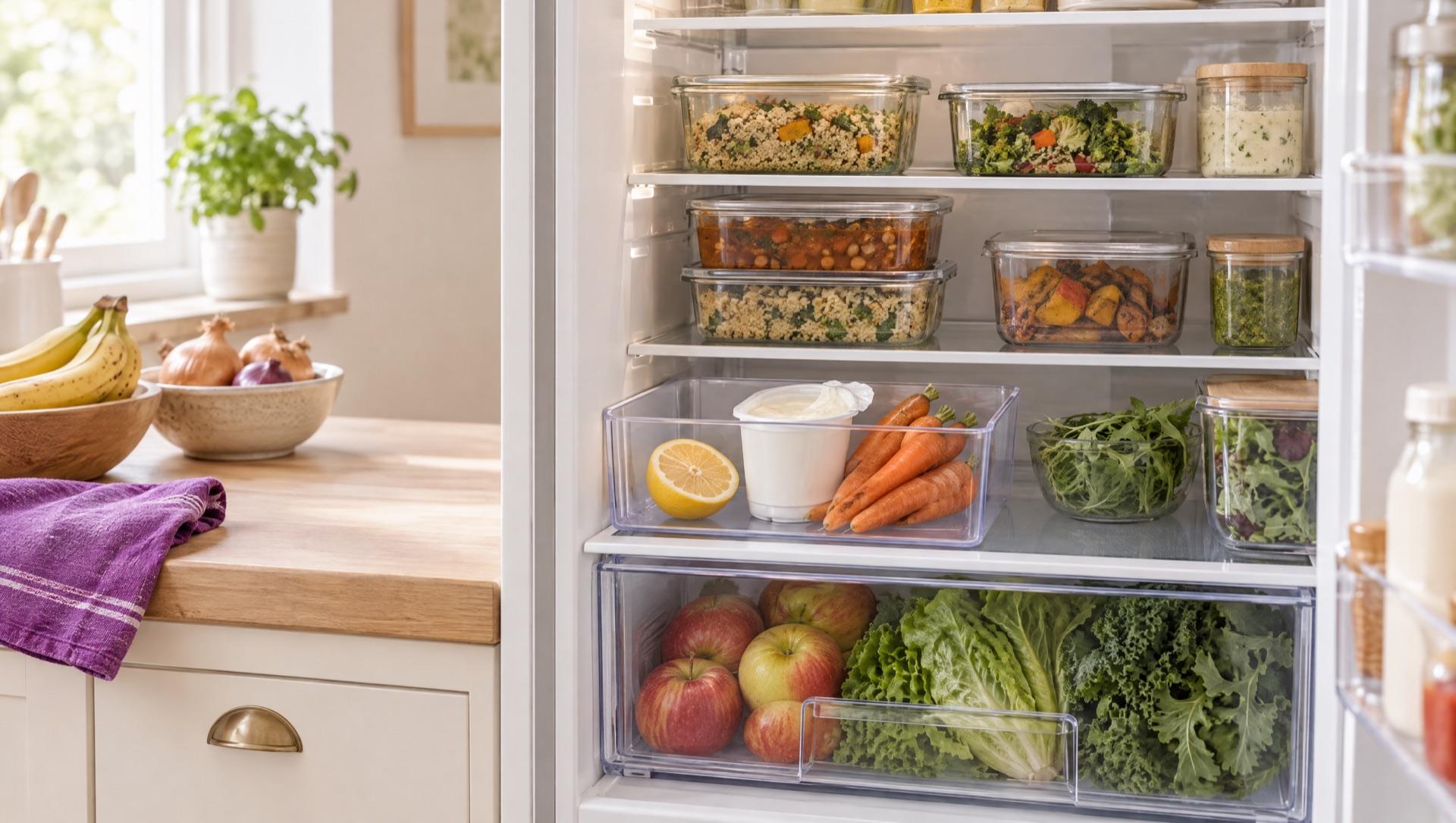
7. Give the fridge a "use first" spot
Do this: pick one shelf or a box at eye level for anything opened, half used or close to its date. Look there before you cook anything.
Why people quit: it turns into a second junk shelf that nobody checks.
Make it stick: keep it small, and make it the rule that tonight's dinner uses something from it if it can.
8. Set the fridge to 5°C / 40°F or below
Do this: the UK Food Standards Agency says to keep the fridge between 0 and 5°C, and the EPA says 40°F or below. Keep milk and eggs out of the door, which is the warmest part of the fridge.
Most fresh produce lasts longer in a cold fridge too. WRAP's advice is to keep uncut fruit and vegetables, including potatoes, in the fridge at 5°C or below, except onions, bananas and whole pineapples.
Why people quit: you set the dial once and never think about it again. The dial is a setting, not a thermometer, so you never know it's running warm.
Make it stick: put a cheap fridge thermometer on the middle shelf. The FSA suggests checking it once a week.
9. Freeze on day one, not on the last day
Do this: freeze bread, meat, sliced fruit and leftovers you know you won't eat in time, and label each with what it is and the date. You can freeze food right up to midnight on its use-by date, but it'll taste better if it goes in sooner.
Why people quit: the freezer fills up with unlabelled lumps that never get eaten either.
Make it stick: freeze in single portions, label everything, and keep a short list on the freezer door. For bread, freeze half the loaf as soon as you buy it and toast slices straight from frozen.
COOKING AND EATING
10. Read the date properly
Do this: a use-by date is about safety, so don't eat food after it. A best-before date is about quality, so food is usually fine after it if it looks and smells right. The full difference is in use-by vs best-before.
Why people quit: when you're unsure, it's easier to bin anything past any date.
Make it stick: learn which foods carry which date. Most foods with a use-by date are chilled: meat, fish, dairy and ready meals. Cupboard food almost always has a best-before.
11. Decide what the leftovers are for when you serve
Do this: when you dish up, box the extra straight away as a named meal: tomorrow's lunch, or the freezer. Shallow, labelled containers cool faster and are easy to see.
Why people quit: "I'll have that tomorrow" turns into a container at the back of the fridge, found a week later.
Make it stick: box it before you sit down to eat. Most leftovers keep 3 to 4 days in the fridge, and how long leftovers last has the exceptions.
12. Have one use-it-up meal a week
Do this: once a week, usually the night before you shop, cook from whatever is left. Soups, stir fries, frittatas, fried rice and pasta bakes take almost anything, and the EPA suggests the same dishes for produce past its best.
Why people quit: it feels like a punishment meal made of scraps.
Make it stick: give it a fixed format rather than a recipe, like fried rice Friday or soup Sunday, so the only decision is what goes in. If you're stuck, try this method for cooking with the ingredients you have.
IF YOU ONLY DO TWO
Start with habit 1 and habit 2. One week of counting shows where your waste comes from. Looking in the fridge before you shop stops most of it at the source. Add the others once those feel automatic, picking the ones that match what your week of counting showed.
KEEP TRACK WITHOUT A NOTEBOOK
Grozaak keeps a list of what's in your kitchen with dates, shared with everyone in your household. The pack closest to its date is marked Use first, and the morning message tells you what to use up today. When something runs out, you tap Used it or Threw it out, and Insights shows how much you threw out this month in your own currency, compared with last month. That's habit 1, running all year.
Figures come from UNEP's Food Waste Index Report 2024, WRAP, the USDA and the US EPA. Storage advice follows the UK Food Standards Agency, WRAP and the EPA.
Sources
- UNEP: World squanders over 1 billion meals a day (Food Waste Index Report 2024)
- WRAP (UK): Household food waste levels threaten UK's carbon reduction ambitions
- WRAP (UK): UK bins thrive on a five-a-day diet of fruit and veg
- WRAP (UK): Love your leftovers: feast smart, waste less
- USDA: Food Loss and Waste: Consumers
- US EPA: Preventing Wasted Food at Home
- Food Standards Agency (UK): How to chill, freeze and defrost food safely