What to make with the ingredients you have: a 5-minute method
By Grozaak · Published on · 7 min read
The short answer
You don't need a recipe. You need a protein, a starch, a vegetable and something to tie them together, and you almost certainly have all four in the kitchen right now.
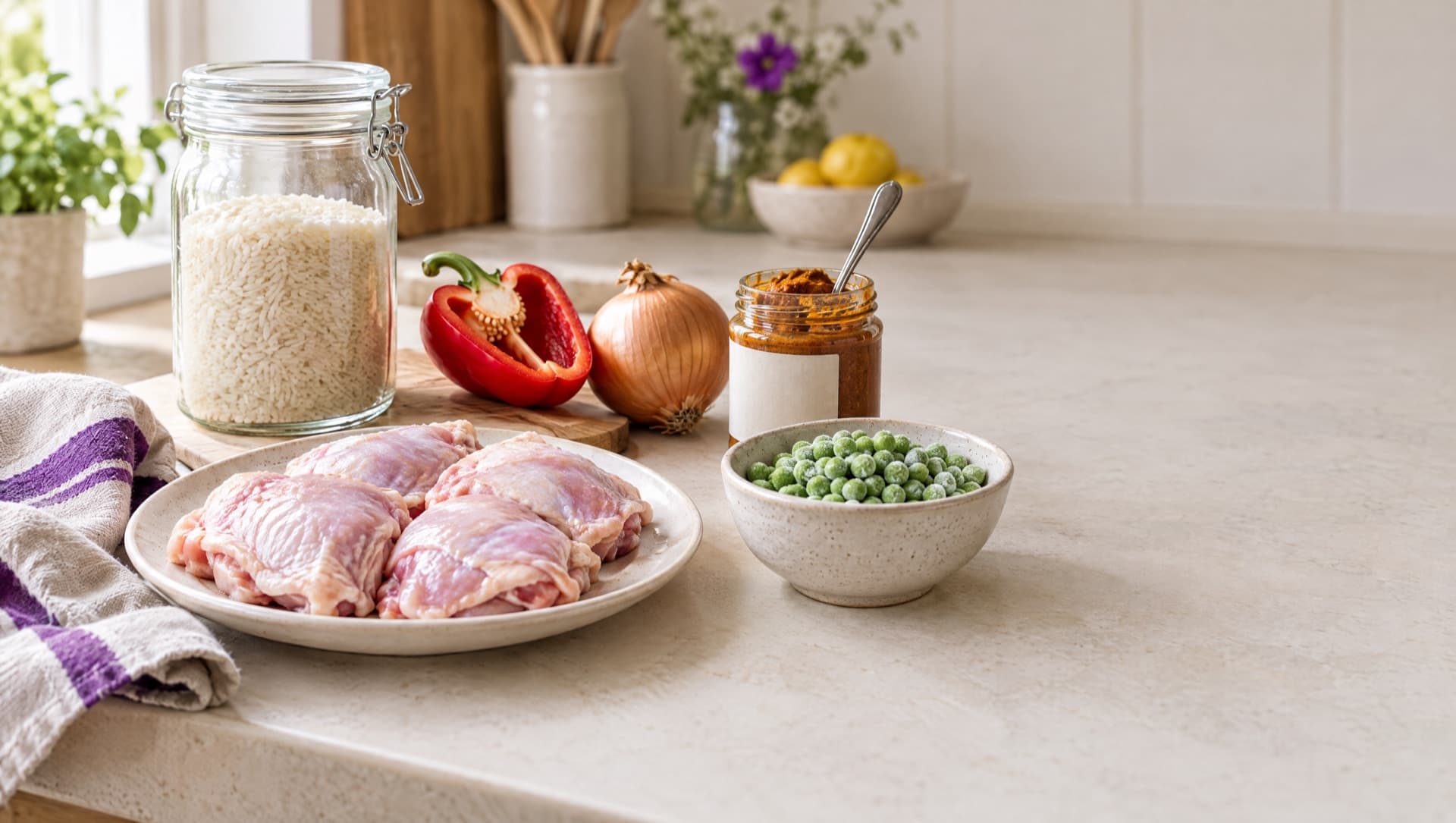
It's 6:40pm. There is half a pack of chicken thighs, some rice, a sad half-pepper, an onion and a jar of something. You type "what to make with the ingredients I have" and get a wall of recipes that each need three things you don't have. Twenty minutes later you order a takeaway and the chicken goes off on Thursday.
This guide gives you a method instead of a recipe list. It takes about five minutes the first time and about thirty seconds once you've done it a few times.
Why recipe sites can't answer this question
A recipe starts from a finished dish and works backwards to a shopping list. Your question runs the other way: you start from a fixed set of ingredients and want to reach any good dish. Recipe search is built for the first problem, so it keeps handing you the second one.
The "ingredient search" tools on recipe sites don't fix it either. They match on whole ingredient names, so "chicken thighs" won't match a recipe written for "chicken breast", and "half a pepper" is not a searchable quantity. You end up with the same problem: recipes you can almost make.
The fix is to stop thinking in recipes and start thinking in slots.
The four-slot method
Almost every weeknight dinner on earth is one item from each of four columns. Pick one per column from what you actually have, choose a cooking style, and you have dinner.
| Slot | What counts | If you have none |
|---|---|---|
| Protein | Chicken, mince, sausages, fish, eggs, tofu, tinned tuna, chickpeas, lentils, beans, paneer, leftover roast meat, bacon, halloumi | Eggs or a tin of beans. Nearly every kitchen has one. |
| Starch | Rice, pasta, noodles, potatoes, bread, tortillas, couscous, bulgur, polenta, gnocchi, naan | Toast. Seriously. Everything goes on toast. |
| Vegetable | Anything fresh, frozen or tinned: onion, pepper, tomato, spinach, peas, sweetcorn, carrots, broccoli, courgette, mushrooms, cabbage, that half-bag of salad | Frozen peas. If you have no frozen peas, buy frozen peas. |
| Binder / flavour | A sauce, fat or seasoning that makes the other three feel intentional: tinned tomatoes, soy sauce, curry paste, stock cube, pesto, cheese, cream, yoghurt, lemon, garlic, chilli, a jar of anything | Oil, salt, garlic and whatever dried herb you own. |
Then pick a style, which is really just a question of pan and heat:
- Stir-fry: protein and veg in a hot pan, soy sauce or curry paste, over rice or noodles. 15 minutes.
- Traybake: everything on one tray with oil and seasoning, 25–35 minutes at 200°C / 400°F. Works for almost any protein except mince.
- One-pot: onion first, then protein, then starch and liquid (stock or tinned tomatoes), lid on. Risotto, pilaf, pasta-in-the-pot and most curries are this.
- Fried rice / hash: leftover starch, chopped protein and veg in a pan, an egg cracked over the top. The best use of day-old rice or potatoes.
- Soup: onion, veg, protein, stock, blend or don't. The last stop for anything about to turn.
Four slots × five styles gives you twenty frameworks before you've thought about a single recipe, and every one of them works with substitutions because the slots are categories, not ingredients.
The one rule: start with whatever is closest to going off
The method above answers "what can I make". This rule answers "what should I make", and it's the one that actually saves money.
Before you pick slots, look for the ingredient with the shortest life left. Fresh fish and mince go first, then chicken, then soft vegetables and herbs, then dairy. That ingredient is your protein or your vegetable tonight, no debate. Build the other slots around it. (If the pack has a date, remember that only a use-by date is about safety; a best-before date is about quality, and food is usually fine past it.)
Do this every evening and the pattern changes. Instead of cooking the thing you fancy and throwing away the thing you forgot, you eat your way through the fridge in roughly the order it was bought. That matters more than it sounds: the UN's 2024 Food Waste Index found that 60 per cent of the billion-plus tonnes of food wasted worldwide in 2022 was wasted at home, and the bulk of it is fresh produce, bread and dairy that was bought with good intentions and lost behind the milk.
If nothing is about to turn, cook from the freezer or the cupboard and leave the fresh food for tomorrow.
Ten combinations that always work
Each line is one protein, one starch, one veg, one binder, one style. Swap any slot for what you have.
| Dinner | Protein | Starch | Veg | Binder | Style |
|---|---|---|---|---|---|
| Chicken fried rice | Chicken thighs or leftover chicken | Day-old rice | Peas, onion, any veg | Soy sauce, egg | Fried rice |
| Mince and tomato pasta | Mince (beef, turkey, pork) | Pasta | Onion, carrot, pepper | Tinned tomatoes | One-pot |
| Sausage traybake | Sausages | Potatoes, chunked | Onion, pepper, courgette | Oil, mustard or honey | Traybake |
| Egg and potato hash | Eggs | Leftover potatoes | Onion, spinach, anything | Cheese | Hash |
| Chickpea curry | Tinned chickpeas | Rice | Onion, spinach, tomato | Curry paste or powder, coconut milk or yoghurt | One-pot |
| Tuna pasta | Tinned tuna | Pasta | Sweetcorn, peas | Cheese or a little cream | One-pot |
| Salmon or any fish traybake | Fish fillets | New potatoes | Broccoli, tomatoes | Lemon, garlic, oil | Traybake |
| Paneer or tofu stir-fry | Paneer or tofu | Noodles | Pepper, cabbage, carrot | Soy, garlic, chilli | Stir-fry |
| Lentil soup | Red lentils | Bread on the side | Onion, carrot, celery | Stock cube, cumin | Soup |
| Quesadilla | Leftover roast meat or beans | Tortillas | Pepper, onion, sweetcorn | Cheese | Pan-fry |
If you're stuck between two of these, pick the one that uses the ingredient closest to its date.
Let the app do the matching
The method works. The catch is step one: knowing what you have and which of it is about to turn. That is the part people skip, because it means opening every drawer.
Grozaak keeps that list for you. Add food as you put it away (scan the barcode, search the product by name or type it), and the app holds your fridge, freezer and cupboard with a date on each item, colour-coded by how urgent it is. Open the Cook tab and the top of the screen shows what to use soon; tap Get ideas and it suggests dishes built mostly from what you already have, putting the food that's about to spoil first. Tell it you're vegetarian, pescatarian or vegan, list the foods it should never suggest, and it adjusts for everyone in your household.
Every suggestion shows what you have and what's missing, and anything missing goes to your shopping list in one tap. Your own saved recipes get the same treatment: the Cook tab ranks them by what's in the kitchen and what's expiring, so "spinach and cheddar frittata, have 6 of 7, uses spinach, tomorrow" floats to the top on the right night. To save a recipe you saw on Instagram, TikTok, YouTube, Facebook or Pinterest, tap Share and choose Grozaak, or paste the link, a photo of a cookbook page, or the text.
The free plan gives you three recipe ideas a week, which is enough to try the method; Pro suggests dishes every day and comes with a 7-day trial. Ideas are written by AI from the names of the food in your kitchen, so check them, especially for allergies.
FAQ
What can I make with the ingredients I have in my fridge? Pick one protein, one starch, one vegetable and one sauce or seasoning from what's there, then choose a style: stir-fry, traybake, one-pot, hash or soup. Start with the ingredient closest to its use-by date.
Is there an app that suggests recipes based on what you have? Yes. Grozaak tracks your pantry, fridge and freezer and suggests dishes from your actual inventory, prioritising food that's about to expire. Several recipe sites offer ingredient search, but they match on exact names and don't know what's going off.
Are there recipes with the ingredients I have that don't need a shop? Any of the ten combinations above, with the slots swapped for what's in the kitchen. The binder is the slot people are missing most often, and a stock cube, tinned tomatoes or an egg usually fills it.
What if I only have random ingredients? Random usually means you're missing a binder. Add one: tinned tomatoes, soy sauce, a stock cube, cheese or an egg turns most odd combinations into a meal.
How do I cook with what I have without wasting food? Cook the shortest-dated ingredient first every night. Fresh fish and mince, then chicken, then soft veg and herbs, then dairy. Everything else can wait a day.